
'India's manufacturing will take 10-15 years to catch up with China.'

The nomination would put Yellen on course to be the first woman to lead the institution.
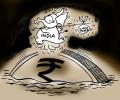
India's public debt ratio, which remarkably remained stable at around 70 per cent of the GDP since 1991, is projected to jump by 17 percentage points to nearly 90 per cent because of increase in public spending due to COVID-19, the IMF said.

India's economic growth is now 'extremely fragile' and needs all the support that it can get, as private consumption and capital investment are yet to pick up, RBI Monetary Policy Committee (MPC) member Jayanth R Varma said on Friday. Varma further said out of the four engines of growth for the economy, exports and government spending supported the Indian economy through the pandemic, but other engines need to pick up the baton now. " I like to think in terms of the four engines of growth for the economy: exports, government spending, capital investment and private consumption. "...while exports cannot be the main driver of growth because of the global slowdown, government spending is necessarily limited by fiscal constraints," he told PTI.

The Reserve Bank of India on Friday raised the benchmark lending rate by 50 basis points to 5.40 per cent to tame inflation.

India's macroeconomic situation is improving fast and the country's GDP growth will turn positive in the third and fourth quarters of the current financial year, eminent economist Ashima Goyal said on Sunday. Goyal in an interview to PTI said the management of the COVID-19 pandemic and gradual unlocks announced by the government have helped in avoiding multiple COVID-19 peaks. The growth estimates by different agencies are being continuously revised, she said.

For 2021-22, it projected the economy to clock a growth of 10.6 per cent.

The meeting will review the current global and domestic economic situation and financial stability issues, including those concerning banking and NBFCs.

The additional cash will now give the Centre more headroom for stimulating the economy.

Finance Minister Arun Jaitley on Friday tabled the pre-Budget Economic Survey in the Lok Sabha.

Pragmatism and flexibility is a virtue. An untethered and short-term approach to policymaking is a flaw, argues Mihir S Sharma.

The country's largest carmaker Maruti Suzuki India on Thursday launched a new version of its multi-purpose vehicle XL6 as it gears up to bring a slew of new products this fiscal and take the challenges of prevailing uncertainties head-on. The new XL6 is powered by a 1.5-litre petrol engine with a peak power of 75.8 kW. It is available in manual and automatic transmission options, priced between Rs 11.29 lakh and Rs 14.55 lakh (ex-showroom). Speaking at the launch, newly appointed Maruti Suzuki India managing director and CEO Hisashi Takeuchi said, "With the uncertainties prevailing today, the business realities are continuously evolving.

The panel's report also provides a range for fiscal deficit and debt path of both the Union and states and also recommended additional borrowing room to states based on performance in power sector reforms. Finance Commission is a constitutional body that gives suggestions on Centre-state financial relations. The report of the 15th Finance Commission was tabled in the Lok Sabha by Finance Minister Nirmala Sitharaman.

It also recommended that the RBI accounting year (July-June) may be brought in sync with the fiscal year (April to March) from the financial year 2020-21 as it could reduce the need for interim dividend being paid by the central bank.

India's residential market is expected to sustain demand momentum despite rise in mortgage and property rates as sales this year across the top 7 cities are likely to breach pre-pandemic level of 2.62 lakh units, industry players said. After braving four back-to-back disruptions in form of demonetisation, RERA, GST and COVID-19 in the last 6 years, industry experts feel the housing market is going through a lot of structural changes and is now at the start of a long-term upcycle. Homebuyers body FPCE gives credit to the Real Estate Regulatory Authority (RERA) under the Real Estate (Regulation & Development) Act, 2016 for this improved buying sentiment.

S&P Global Ratings has forecast India's economy to shrink by 5 per cent in the current fiscal. It, however, has projected GDP growth to be 8.5 per cent in 2021-22 and 6.5 per cent in 2022-23.

The Reserve Bank on Friday projected retail inflation to be in 5-5.2 per cent range during the first half of the next fiscal year, expecting further softening of vegetables prices in near term. Also, it has lowered the retail inflation forecast for the current January-March quarter of 2020-21 fiscal at 5.2 per cent. The Reserve Bank (RBI) has kept the key policy rate unchanged at 4 per cent, with an accommodative stance, so as to ensure that inflation remains well within the target, Governor Shaktikanta Das said while announcing the last monetary policy of 2020-21.
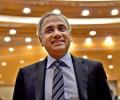
Infosys chairman Nandan Nilekani voluntarily chose not to receive any remuneration for his services.

Arguing that the recent elevation in retail inflation is not structural but supply-driven and therefore potentially transitory, a foreign brokerage report has forecast that the benign interest rate regime will continue at least until next June. The assessment comes a day ahead of the third bimonthly monetary policy review on Friday wherein it's widely expected that the monetary authority will leave the key rates unchanged at 4 per cent even though the consumer prices have been on remaining above 6 per cent since May and crude prices have been north of $70 a barrel for months.

India's economic growth is estimated to have slowed down to 11-year low of 5 per cent during the current financial year ending March 2020.
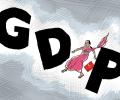
Moody's said the government will face challenges in achieving its deficit target for the fiscal year ending March 2021, amid persistent structural and cyclical headwinds to growth.
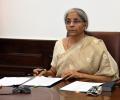
Finance Minister Nirmala Sitharaman on Friday said the entire fiscal stimulus announced by the government would be funded by borrowings and revenues, and taxpayers will not be charged even a single penny. "I am not expecting the stimulus to be funded by taxpayers. Not a rupee from the taxpayer. The entire amount .... is shown as revenue and borrowings. "The government is borrowing to spend, but it is not taking from people," she said while interacting with journalists at the IWPC (Indian Women's Press Corps).

Difficulties in containing the virus, an anaemic policy response, and underlying vulnerabilities, especially across the financial sector, are leading us to expect growth to fall by 5 per cent this fiscal year before rebounding in 2021, S&P said in a report.
RBI said aggregate demand during the year so far suggests that the shock to consumption is severe, and it will take quite some time to mend and regain the pre-COVID-19 momentum.

'Recent underperformance notwithstanding, equities should constitute a major part of investors' financial portfolio.'

"I cannot deliver the mandate on which I was elected," she said speaking outside Downing Street.

It pointed out that farm loan waivers, combined with a potential stimulus which the government is mulling now, can result in a 1 percentage point slippage in fiscal deficit

Jaitley said he would stick to the government's existing fiscal deficit target.

India's current account deficit is expected to deteriorate in the current fiscal on account of costlier imports and tepid merchandise exports, according to the Finance Ministry's monthly economic review. The review released on Thursday by the ministry also said that global headwinds would continue to pose a downside risk to growth as crude oil and edibles, which have driven inflation in India, remain major imported components in the consumption basket. For the present, it said, "their global prices have softened, as fears of recession have dampened prices somewhat. This would weaken inflationary pressures in India and rein in inflation."

The government wants new domestic companies to set up their manufacturing units fast and hence the concessional tax rate of 15 per cent has been extended by a year till March 2024, revenue secretary Tarun Bajaj said on Friday. Stating that direct and indirect tax collections are going up and have good buoyancy, Bajaj said it means that the corporate sector is also doing well, and India's tax to GDP ratio could be "highest ever" in the current year. The Budget 2022-23 presented on February 1 has proposed that the concessional 15 per cent corporate tax rate would be available for one more year till March 2024 for newly incorporated manufacturing units.

A swift recovery in oil demand in India is not only helping the stability of the global market, it is giving huge fiscal headroom to the government in terms of additional excise duty.

The government kept its nerve in the face of a massive shock. It chose not to resort to a massive fiscal stimulus. It focused instead on providing liquidity support and easing restrictions on movement in stages, observes T T Ram Mohan.

Retail prices of three pulses -- tur, moong dal and urad -- are on a declining trend after the government took coordinated actions with state governments to check hoarding, the Food and Consumer Affairs Ministry said on Friday. "The upward pressure on retail prices of tur, moong dal and urad has stabilized in 2021 and is on a stable or declining trend," it said in a statement. According to the ministry, the average increase in prices of these three pulses during April to June 16, 2021 was 0.95 per cent as compared with previous three months (January-March, 2021).

Regional States will be worried that the US's nascent engagement with the Taliban behind the fig leaf of humanitarian aid enables the return of US intelligence personnel to Afghanistan, observes Ambassador M K Bhadrakumar.
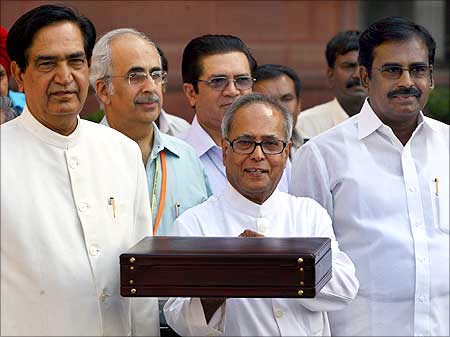
The sad truth is that the debt-to-GDP ratio will shoot up close to 90 per cent in the coming year, and the fiscal deficit glide path does not promise to reduce it substantially any time soon, predicts Mihir S Sharma.

These are the highlights of the seventh bi-monthly monetary policy statement for 2019-20 by the RBI amid COVID-19 pandemic:

'We have to think of the repercussions if public sector banks are privatised and if they go to foreign hands.'

If the Centre and states are keen on spending more to meet the COVID-19 challenges in the coming year, they must bear in mind the need to raise more resources through taxes and non-tax revenues, suggests A K Bhattacharya.

Markets are assuming that by the second half of 2021, the world will be approaching some type of normalcy, points out Akash Prakash.

Arguing that Pakistan will remain a key player in counter terrorism post-2014, the United States has proposed $280 million in military assistance to the country, although it wants to cut civilian aid in an effort to acknowledge India's concerns about misuse of the funds.
